Pedestrian Accidents
A pedestrian injured by a motorist, even at a low speed, is likely to suffer serious injuries that require immediate medical attention. If a careless driver hurt you, we're here to fight for what you're owed.
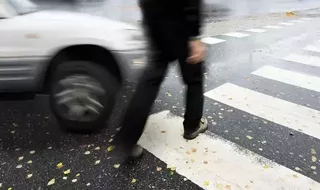
A pedestrian injured by a motorist, even at a low speed, is likely to suffer serious injuries that require immediate medical attention. If a careless driver hurt you, we're here to fight for what you're owed.
Fault turns on right of way, and Arizona sets it out by statute. Where signals are absent or not operating, a driver must yield to a pedestrian crossing within a crosswalk, slowing or stopping if necessary (A.R.S. § 28-792). The same statute bars a second driver from overtaking a vehicle that has stopped to let someone cross, the maneuver behind many of the most serious pedestrian injuries. Crossing outside a crosswalk does not end a claim. Under Arizona's pure comparative negligence rule (A.R.S. § 12-2505), a pedestrian found partly at fault still recovers, reduced by their share, which is why insurers press the jaywalking argument so hard. The deadline to sue is two years from the collision (A.R.S. § 12-542), or a 180-day notice of claim where a government entity is involved (A.R.S. § 12-821.01). Consultations are free and there is no fee unless we win.
If you suffered an injury as a pedestrian as a result of a careless driver, it is important to contact an attorney that is well versed in the laws and regulations governing pedestrian injury claims. We will properly investigate the facts surrounding your case and apply the relevant law to ensure you are fairly compensated for your injuries.
Pedestrian cases are unlike other traffic claims in one important respect: there is nothing between you and the vehicle. A collision at 25 mph that would leave two drivers shaken but uninjured can put a person on foot in the hospital for weeks. Arizona consistently ranks among the worst states in the country for pedestrian deaths, and the Phoenix metro's wide, fast arterials, Bell Road, Camelback, Indian School, Van Buren, are where a disproportionate share of them happen.
This is the question every pedestrian claim turns on, and Arizona answers it in a handful of statutes worth knowing.
In a crosswalk. Where signals are absent or not operating, a driver must yield to a pedestrian crossing within a crosswalk; slowing or stopping if necessary (A.R.S. § 28-792). The same statute bars a second driver from overtaking a vehicle that has stopped at a crosswalk to let someone cross, which is the mechanism behind a large share of serious multi-lane strikes: the near-lane car stops, the far-lane car does not.
Outside a crosswalk. A pedestrian crossing anywhere other than a marked or unmarked crosswalk must yield to vehicles (A.R.S. § 28-793). Insurers lean on this hard, and it is where most pedestrian claims get undervalued.
But failing to yield is not the end of your claim. Arizona separately requires that every driver exercise due care to avoid colliding with any pedestrian on any roadway, sound the horn when necessary, and take proper precaution on observing a child or a confused or incapacitated person (A.R.S. § 28-794). A driver who was speeding, texting, or simply not looking does not escape responsibility because you crossed mid-block. Under Arizona's pure comparative negligence rule (A.R.S. § 12-2505) fault is apportioned rather than cut off; a pedestrian found 40% at fault still recovers 60% of their damages. The insurer's opening position is rarely the legally correct one.
Hit-and-run is far more common in pedestrian cases than in vehicle-to-vehicle crashes, and it does not necessarily leave you without a recovery. Your own uninsured motorist coverage generally applies to a pedestrian struck by an unidentified driver; you do not need to have been in a car, and in many cases you do not need to own the policy, since coverage often extends to household family members. Report the collision to police promptly; UM claims typically require it. Nearby business and doorbell cameras are frequently the evidence that identifies a vehicle, and that footage is often overwritten within days.
In Arizona, if you were a pedestrian injured by a negligent motorist you generally must bring a claim within two years of the date of the incident (A.R.S. § 12-542). If legal action is not sought within this time you forfeit your right to sue the negligent driver.
Some deadlines are far shorter. If a government vehicle caused your injuries, a city bus, a municipal truck, a police vehicle, a notice of claim must generally be served within 180 days (A.R.S. § 12-821.01), and suit filed within one year. Where a collision was fatal, a wrongful death action follows its own rules about who may bring it (A.R.S. § 12-611). Claims involving an injured child are treated differently again. It is important to hire an attorney familiar with the statute of limitations for your specific case to ensure your claim is filed on time.
If you or a loved one have been injured in a pedestrian accident, contact Sher Law Group for a free case review. If we take your case, we will not only help you navigate through the legal process but also help you find medical providers that will await compensation for their services until your claim is resolved. We are here to protect your rights and ensure you receive the maximum settlement to help make you whole.
Often yes. Crossing outside a crosswalk means you failed to yield under A.R.S. § 28-793, but Arizona uses pure comparative negligence; your recovery is reduced by your share of fault rather than barred. Drivers also owe a separate duty of due care to avoid colliding with any pedestrian on any roadway, so a speeding or distracted driver remains responsible for their share.
Your own uninsured motorist coverage generally applies to a pedestrian struck by an unidentified driver, and it often extends to household family members even if the policy is not yours. Report the collision to police promptly, since UM claims typically require it, and ask us to send evidence-preservation letters to nearby businesses before their camera footage is overwritten.
Not before speaking with an attorney. Pedestrian injuries frequently involve fractures, head trauma, and surgeries whose full cost is not known for months. Early offers are made precisely because that number is still unknown, and accepting one generally closes your claim for good.
Generally two years from the date of the collision under A.R.S. § 12-542. If a government vehicle or public entity was involved, a notice of claim is generally due within 180 days under A.R.S. § 12-821.01.
Surviving family members may bring a wrongful death action under A.R.S. § 12-611, which allows recovery for losses the statute treats as belonging to the survivors rather than to the person who died. Who may file, and in what order, is governed by statute.
Nothing up front. We work on contingency; there is no fee unless we win your case, and the initial consultation is free.
We handle pedestrian injury claims throughout the state. Explore the communities we serve:
Phoenix · Tucson · Scottsdale · Mesa · Maricopa · Tempe · Chandler · Glendale · Gilbert · Surprise