Motorcycle Accidents
Motorcycle collisions often result in severe injuries because a motorcycle lacks the protections of a vehicle. Common injuries include road rash, broken bones, nerve damage, head injuries, neck injuries, and spinal injuries.
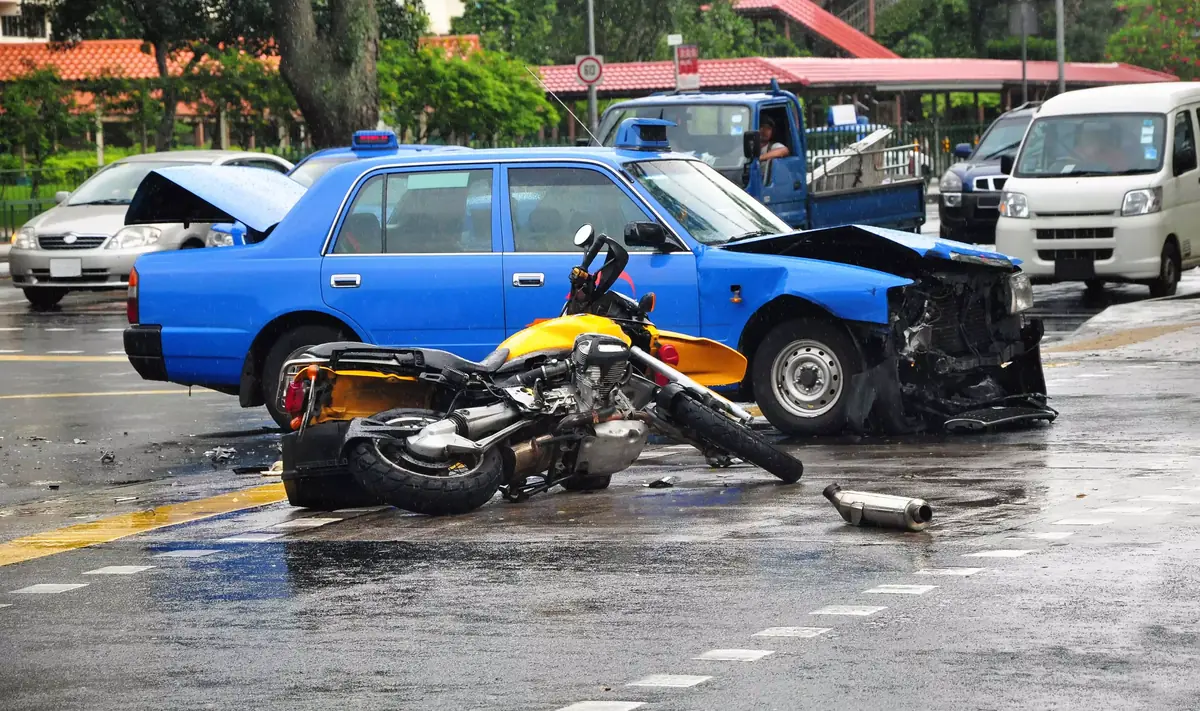
Motorcycle collisions often result in severe injuries because a motorcycle lacks the protections of a vehicle. Common injuries include road rash, broken bones, nerve damage, head injuries, neck injuries, and spinal injuries.
Most of what riders are told about Arizona motorcycle law is wrong, and the errors cost claims. Helmets are not required for adult riders; Arizona mandates one only for operators and passengers under eighteen (A.R.S. § 28-964), so riding without one is lawful and is not itself negligence. Lane filtering is legal, but narrowly: only where the street has at least two lanes in the same direction, the speed limit is 45 mph or less, and the motorcycle travels no faster than 15 mph (A.R.S. § 28-903). Outside those conditions it remains prohibited. Because Arizona applies pure comparative negligence (A.R.S. § 12-2505), an insurer arguing you were partly at fault reduces your recovery rather than defeating it. The deadline to sue is two years from the crash (A.R.S. § 12-542). Consultations are free and there is no fee unless we win.
Motorcycle cases carry a bias that other traffic claims do not. Adjusters and jurors arrive with an assumption that the rider was speeding, weaving, or taking a risk; and insurers build their defense on it. Meanwhile the injuries are typically far more severe than in a comparable car crash, because there is no cage, no airbag, and no crumple zone. The result is a category of claim where the medical bills are largest and the resistance is stiffest.
That combination is exactly why the legal detail below matters. Most of what insurers assert about Arizona motorcycle law is either incomplete or wrong.
Arizona requires a protective helmet only for operators and passengers under eighteen (A.R.S. § 28-964). Adult riders are not required to wear one. All operators must wear approved protective glasses, goggles, or a face shield unless the motorcycle has a windshield.
Insurers routinely argue that an adult rider who was not wearing a helmet caused their own injuries. Arizona law imposed no helmet duty on that rider, so the failure to wear one is not a violation of any statute. The argument is a valuation tactic, not a legal rule, and it should be treated as one.
Arizona permits the operator of a two-wheeled motorcycle to pass a stopped vehicle in the same lane and to move between lanes of traffic, but only where the street has at least two lanes in the same direction, the speed limit is 45 mph or less, and the motorcycle travels no faster than 15 mph (A.R.S. § 28-903). Outside those conditions, operating between lanes remains prohibited.
The same statute entitles every motorcycle to the full use of a lane, and forbids any driver from operating so as to deprive a motorcycle of it. Where a car drifted into a lane already occupied by a rider, that provision is often the cleanest statement of the duty that was breached.
Under Arizona's pure comparative negligence rule (A.R.S. § 12-2505), a rider found partly responsible still recovers the remaining share. There is no threshold that cuts off recovery. When an insurer assigns you a large percentage of fault, that figure is an opening negotiating position.
Arizona's minimum liability limits are low relative to what a serious motorcycle injury costs, and a single surgery can exhaust them. Your own uninsured and underinsured motorist coverage is frequently the difference between a nominal recovery and a meaningful one, and UM/UIM can apply on top of the at-fault driver's policy rather than instead of it. Bring your own declarations page to the consultation; riders are often carrying coverage they have forgotten about.
In Arizona, if you were injured in a motorcycle accident you generally must bring a claim within two years of the date of the incident (A.R.S. § 12-542). If legal action is not sought within this time you forfeit your right to sue the negligent driver.
If a government vehicle caused the crash, or a road hazard on a public roadway contributed to it, a notice of claim must generally be served within 180 days (A.R.S. § 12-821.01) and suit filed within one year. Where a crash was fatal, a wrongful death action follows its own rules (A.R.S. § 12-611). It is important to hire an attorney familiar with the statute of limitations for your specific case to ensure your claim is filed on time.
If you or a loved one have been injured in a motorcycle accident, contact Sher Law Group for a free case review. If we take your case, we will not only help you navigate through the legal process but also help you find medical providers that can properly manage your injuries and await compensation for their services until your claim is resolved. We are here to protect your rights and ensure you receive the maximum settlement to help make you whole.
No. Arizona requires helmets only for riders and passengers under eighteen under A.R.S. § 28-964, so an adult riding without one violated no statute. Insurers frequently raise it to reduce the value of a claim, particularly with head injuries, but it is an argument rather than a legal bar.
Lane filtering is legal within limits. A two-wheeled motorcycle may pass a stopped vehicle in the same lane and move between lanes under A.R.S. § 28-903, but only on a street with at least two lanes in the same direction and a speed limit of 45 mph or less, and only at 15 mph or slower. Moving between lanes of traffic outside those conditions is still prohibited.
It generally helps. A driver who failed to see a motorcycle that was lawfully in its lane has described a failure to keep a proper lookout. Arizona also entitles every motorcycle to the full use of a lane and forbids other drivers from depriving them of it.
Your own uninsured and underinsured motorist coverage may apply, and UIM can stack on top of the at-fault driver's limits rather than replacing them. Because Arizona's minimum liability limits are easily exhausted by a serious motorcycle injury, this coverage is often where most of the recovery comes from.
Generally two years from the date of the crash under A.R.S. § 12-542. If a government vehicle or a public roadway defect was involved, a notice of claim is generally due within 180 days under A.R.S. § 12-821.01.
Nothing up front. We work on contingency; there is no fee unless we win your case, and the initial consultation is free.
We represent riders throughout the state. Explore the communities we serve:
Phoenix · Tucson · Scottsdale · Mesa · Florence · Yuma · Fountain Hills · Tempe · Chandler · Gilbert